Yin Yoga Classes
Slower, quieter, deeper. We hold poses for 3-5 minutes while the body gradually releases tension you didn't know you were carrying. If you struggle to switch off, this might be exactly what you need.
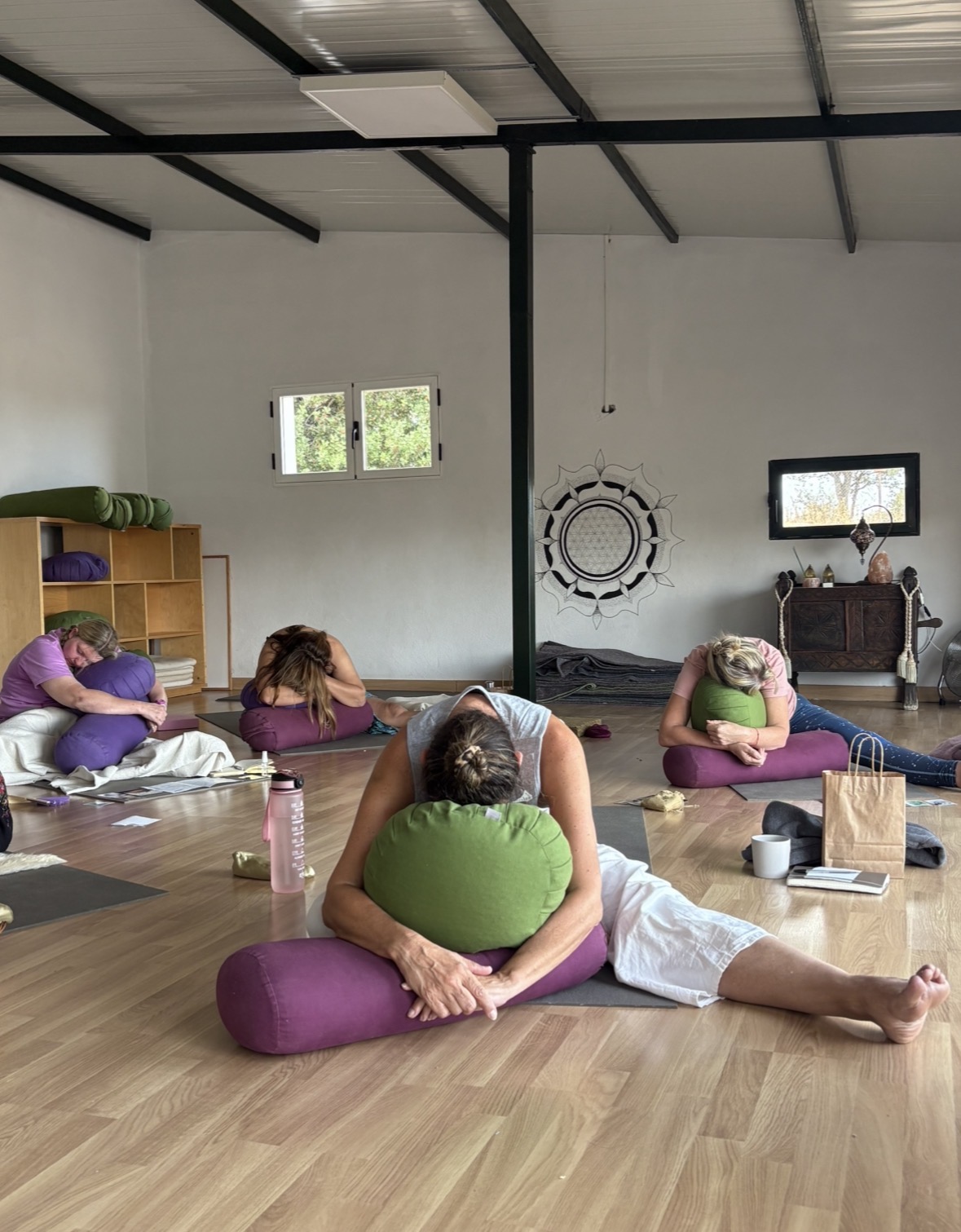
Why Yin is Different
Most yoga is about movement. Yin is about stillness. Instead of flowing between poses like in Hatha yoga, we find a position, make it comfortable with bolsters and blocks, and then stay there — three minutes, sometimes five.
The long holds target connective tissue rather than muscles. Fascia, ligaments, the deep stuff around the joints that ordinary stretching doesn't reach. The release comes gradually, like ice slowly melting.
It's also a mental practice. Sitting with discomfort — even mild discomfort — teaches you something. That you can tolerate more than you think. That not everything needs to be fixed immediately. That sometimes the best response to difficulty is simply to breathe.
Who Benefits From Yin?
- People who can't switch off — busy minds, racing thoughts, that feeling of always being 'on'. Yin creates space.
- Anyone with tight hips — desk workers, drivers, runners. The hips hold so much tension, and Yin is brilliant for releasing it.
- Athletes needing recovery — a different kind of training day. Many runners and cyclists use Yin to maintain flexibility.
- People who find Hatha too fast — if you want the benefits of yoga without the flow, Yin is a gentler entry point.
- Anyone dealing with stress or anxiety — the stillness and breathwork have a direct effect on the nervous system.
What to Expect in Class
We'll do maybe 6-8 poses in an hour-long class, far fewer than Hatha. Each one is held for 3-5 minutes, supported by props so you're not straining to hold yourself up. The aim is passive — you find the edge of the stretch and then let go.
It's not always comfortable. Holding still for that long can feel challenging, especially in hip openers. But the sensation should be mild, a gentle pull rather than sharp pain. I'll guide you through it, and you can always come out of a pose if you need to.
Bring warm clothes. Body temperature drops when you're not moving. A blanket to cover yourself is useful, especially in winter. I keep the room warm, but layers help.
Afterwards? People often describe feeling like they've had a massage. Softer, looser, calmer. Some people feel quite tired — in a good way, like after a very good night's sleep.
Common Questions
I'm not flexible at all — is this okay?
Yin isn't about achieving impressive shapes. We use props to bring the floor up to you, so you can work at your own level. Actually, people who are naturally stiff often benefit most because they have the most to release.
Why hold poses for so long?
Connective tissue responds differently than muscle. It needs sustained, gentle pressure over time to release. Think of bending a plastic ruler slowly versus quickly — slow and steady creates lasting change without damage.
Can I do both Yin and Hatha?
Yes — they complement each other beautifully. Hatha yoga for strength and active flexibility, Yin for deep release and stillness. Many people end up doing one of each per week.
Is Yin suitable if I have an injury?
Often, yes — but let me know what's going on before class. Some poses need modifying, and occasionally we might skip certain positions entirely. The slow pace means we can be careful and considered.
Ready to Slow Down?
If constant busyness is wearing you out and you need something that actually helps you let go, Yin might be worth trying. Drop me a message and we can chat about whether it's right for you.
Get in TouchCookie Preferences
Learn more about how we use cookies in our Cookie Policy and Privacy Policy.